
Missing Fandangle
By Lynsi Musselman
One meaning of the word fandangle is “ornate or fantastic ornament,” much like the cast and crew is to the Fort Griffin Fandangle.
For over eight decades, the community of Albany has come together to perform the Fandangle for audiences, celebrating the history and heritage of the area.
In early May, the Fandangle board of directors made the tough decision to cancel the 2020 season due to COVID-19 government restrictions on large gatherings, only the third time in 82 years that the decision has been made for the show to not go on.
This Friday would have been the first performance of the Fandangle season normally held the last two weekends in June.
Outside of a few years during World War II and a Fandangle drought starting in 1958, Texas’ oldest outdoor musical has been a focal point of Albany summers.
In 1938, the musical, originally called Dr. Shackelford’s Paradise, was written by Robert Nail Jr. with music by Alice Reynolds for the Albany senior class to perform as a fundraiser for their senior class trip to Carlsbad Caverns.
Local resident Johnny Musselman said his mother Mary Anna Green Musselman, a member of the senior class of 1938, was in the original performance of the musical.
After WWII, Johnny started participating in Fandangle as well, along with many of the residents who returned from war. His participation in 1947 sparked an interest that would later lead him to help “restart” the show.
“There was a great group of people that came back to Albany after the war, some incredible characters who were very enthusiastic in their support for the Fandangle,” Musselman said.
He said Fandangle at that time was performed on the football field, transformed each summer into a prairie with cut mesquite trees dug into the field.
“G.P. Crutchfield was responsible for building many sets along with the steam calliope and the stagecoach,” Musselman said. “Crutchfield generously donated many men and man hours to Fandangle, and when he died all of that went away.”
Between 1958 and 1963, a full production of the Fandangle ceased to exist. Only a few samplers of the show took place throughout the six-year gap.
Musselman returned home to Albany from the University of Texas in 1964, the same year Nail was asked to put together a full performance of the Fandangle for the opening of the new Pioneer Amphitheater in Palo Duro Canyon.
“I had been drafted for Vietnam and had also been rehearsing for Fandangle,” Musselman said. “When I went to my physical, there was one bag packed for Vietnam and one bag packed for Palo Duro. Luckily, I failed my physical.”
Musselman added that 100 people from Albany went to Canyon, Texas and took over an entire motel.
“We had a glorious eight to 10 day house party with numerous activities going on other than practices at the amphitheater,” He said.
Musselman explained that with a cast and crew in place and a show ready, Fandangle needed a place to perform, so he offered Nail his family ranch for the 1964 show.
He said he recalls riding around the ranch and finding a natural carved-out canyon with a backdrop. Nail told him to get it set up but they had just five weeks.
“Out of the blue, Sam Webb showed up with gloves, his ax, and a shovel,” Musselman said. “After that, there was an out-pouring of help from the community.
He said Sonny Riley and Billy Ayers came with dozers, bleachers arrived from Moran, folding chairs were borrowed from the Stamford Cowboy Reunion, and electricity was donated.
“The community turned nothing into something, showing the Albany ‘can-do’ attitude,” Musselman said. “People came out of the woodwork and from every walk of life with an incredible burst of energy to get the grounds ready.”
After the success of the 1964 Fandangle, Watt Matthews found land closer to town, and the Prairie Theater was completed in time for the 1965 show.
“Fandangle is so good for the town, and of course it will be back next year,” Musselman said. “Lots of people my age who have moved on would come back and have their grandchildren in the show. It is just one of the unfortunate losses of this year like the seniors losing out on the end of their senior year activities. It just simply was not possible to have the show.”
Another longtime Fandangle participant and resident Louann George said she started performing in the Fandangle as a child after WWII.
In 1974, she began playing the calliope for the Fandangle season and has been doing it ever since, in addition to spending three decades as musical director.
“Watt Matthews had a party the night after a sampler and someone mentioned that there was no one to operate the calliope,” George said. “I just got on there and fired it up myself. Clifton Caldwell, a friend of Watt’s just about pulled me off. It was not hard to fire up though.”
George has been a mainstay to the Fandangle scene and is no stranger to helping keep the tradition alive.
“Wouldn’t it be great if Fandangle comes back in all its glory next year,” George said.
Fandangle artistic director Lorna Ayers said this is the first time in 39 years she has experienced a summer without Fandangle.
“It has been a mental and physical adjustment,” Ayers said. “We are feeling the loss of community from our Fandangle family, and our bodies are having to adjust to fewer chigger bites and less sweat-soaked clothes.”
Ayers added she has seen a deeper appreciation for Fandangle from the entire community. Whether they are actively involved in Fandangle or not, it is part of being a citizen of Albany.
“When rehearsals start up again next year, I anticipate a full house and renewed passion for our Fandangle jewel,” Ayers said.
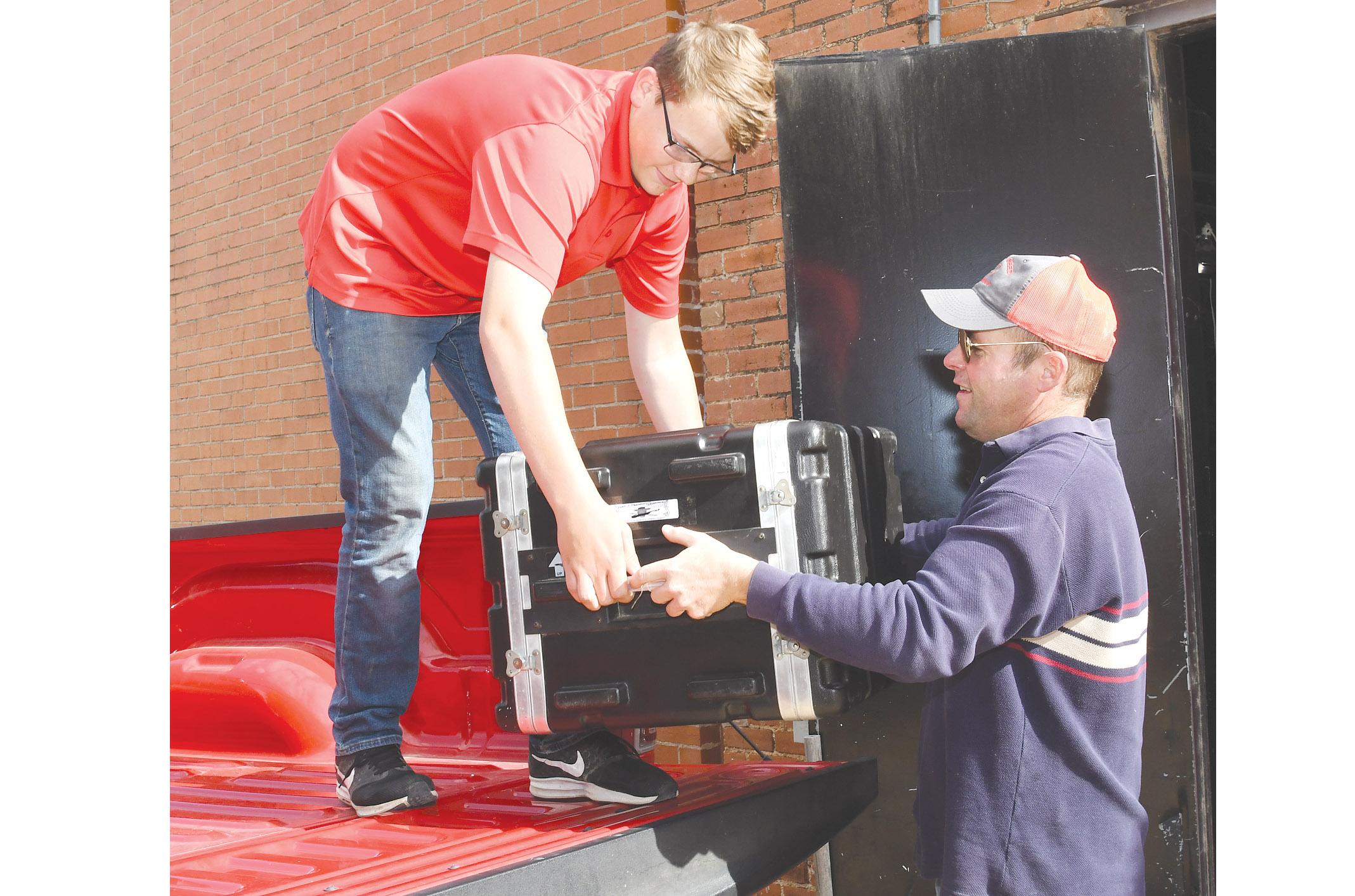
Fandangle sound technician Wade Jones said he started out as a square dancer in 1985.
“After having sound technician Kyle Viertel as my sixth grade band teacher in 1992, I got to help as the ‘mic boy’ and then took over sound my junior year in high school after Kyle retired in 1996,” Jones said. “They have put up with me ever since.”
Jones added that it does not feel like June in Albany without regular rehearsals and all the other activities that go with Fandangle.
“There are so many great memories over the years with cast and crew members who have been in their positions since before I was even thought about,” Jones said. “There are so many stories from the Prairie Theater to samplers put on at Reynolds Bend, and a personal favorite, the samplers at LBJ Ranch at Johnson City.”
Jones explained that he would rather just take this year off and have a great show next year.
“Hopefully, all the health, economic, and social issues will not be as heated as they are now,” Jones said.
The Fandangle tradition is not just intertwined within the community, it has even played at match making for at least two local residents.
Susan Waller, originally from Abilene, met her husband Steve Waller at a Fandangle party in 1981, which was also her first time to see a Fandangle performance.
“I started participating in the Fandangle myself in 1987 and the only other times that I have not been a part of the performance was after the birth of my two youngest children, David and Katie,” Waller said.
Waller added that she just returned from the beach, where she took her first June vacation since 1991.
Fandangle wagon master and third generation participant Cody Leech said getting teams of horses and wagons ready for Fandangle season is a lot of hard work.
“The other wagon drivers and I begin conditioning the horses way before the summer to get them ready for rehearsals and the shows,” Leech said.
The Albany native started his Fandangle days when he just was four years old. He indoctrinated his wife Kalico Leech in 2008, and their kids Leddie and Laithe Leech are fourth generation Fandangle participants.
“Fandangle is hard work, but a lot of fun times have been had,” Leech said. “Sometimes we take things for granted, and you do not realize a good thing until it is gone.”
Leech hopes by not having Fandangle this year, its absence will reinvigorate everyone and create even more participation next year.
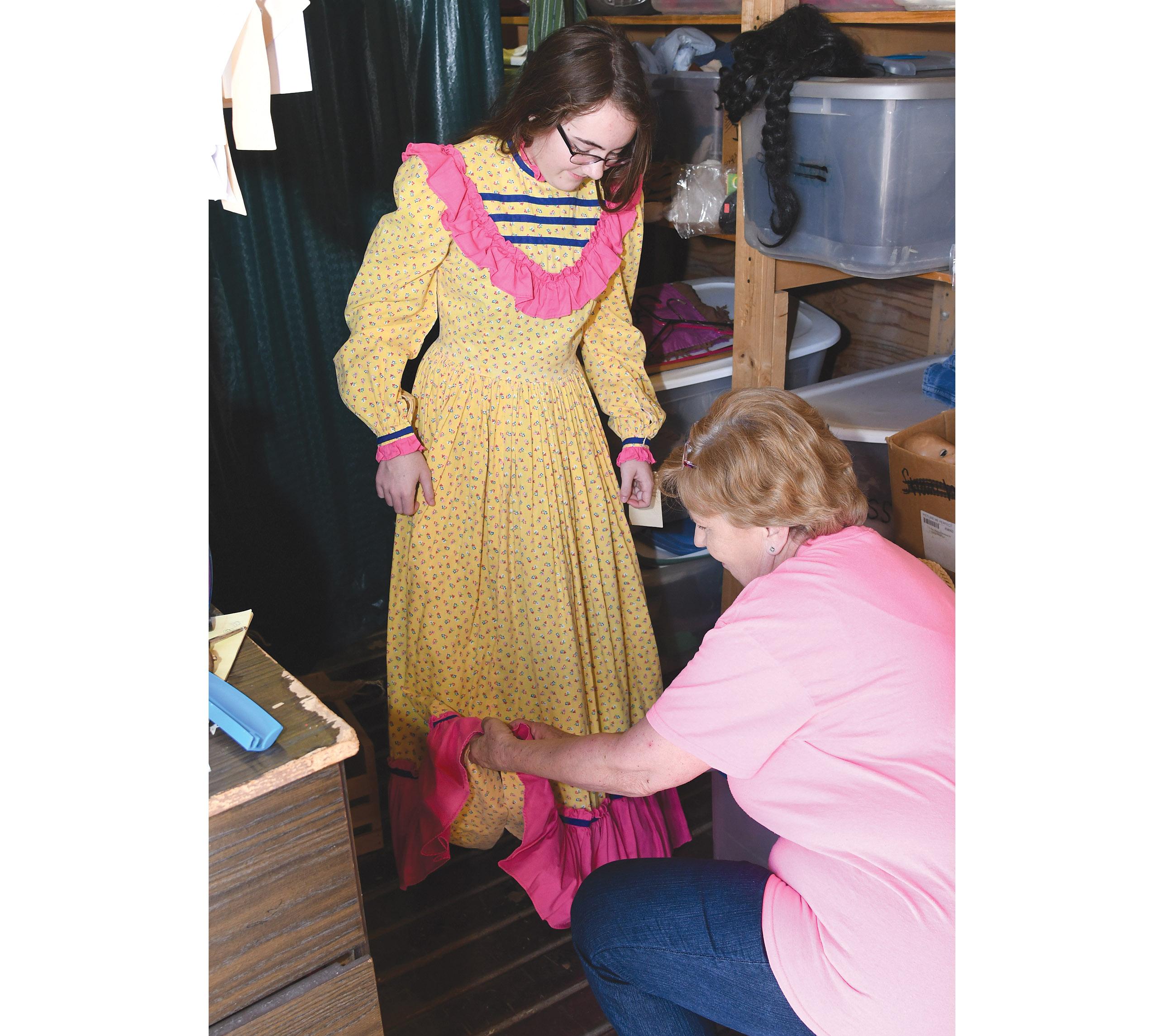
Resident Myra Hise started helping with Fandandle in the early 1990s, working backstage as an assistant with make-up and repairing a few props.
“Gradually, I began making props and sewing costumes and then took over costume responsibilities after Betsy Parsons and Lynda Heatly retired a few years ago,” Hise said.
Hise added that the two months before the show are fast-paced and hectic getting everyone and everything set, but it is also exciting.
“I miss seeing our Fandangle ‘family’ this year,” Hise said. “Each season we make new friends, enjoy our old friends, and share memories of a lifetime.”
She said there is definitely a void with no show this year.
“We will just have to look forward to next year and plan to make it even better,” she said.
The younger generation, and the future of the Fandangle, share in their experiences and loss of not having the Fandangle this summer as well.
Albany High School senior Brodey Jones started in the show as an animal in third grade.
Brodey has been in all the family scenes, was an Indian, and then moved up to huppi hi. In eighth grade, he started working for Fandangle, and now he is Wade Jones’ sound assistant.
“Working with Wade and learning the ins and out of the sound system is my favorite part,” Jones said. “I also miss working with Debra Boyett and Myra Hise. The people are what I actually miss the most.”
Jones said he is looking forward to next year and hopes to spend his last summer before college working with his Fandangle family.
Part-time Albany resident 14-year-old Jordan Fikes has spent her last two summers participating in the Fandangle with her family that moves from Midland each Fandangle season.
Fikes said she has helped out backstage, been an animal, prairie grass, an Indian, and square dancer, and last year was a “young rider.”
“This year I would have been able to dance in huppi hi,” Fikes said. “I am disappointed Fandangle was cancelled. Practicing each night, the routine of the season, and meeting new people was a lot of fun.”
Fikes added that she is excited and ready for next year.
Fikes’ parents, Louisa and Brendan Fikes, sister Hattie, grandparents Melinda and Henry Musselman, cousins, uncle and two aunts all come from Midland each year to participate in the Fandangle.
Fandangle Family
The camaraderie of the Fandangle “family” has a deep-rooted tradition that has carried on through all generations that have been a part of each summer.
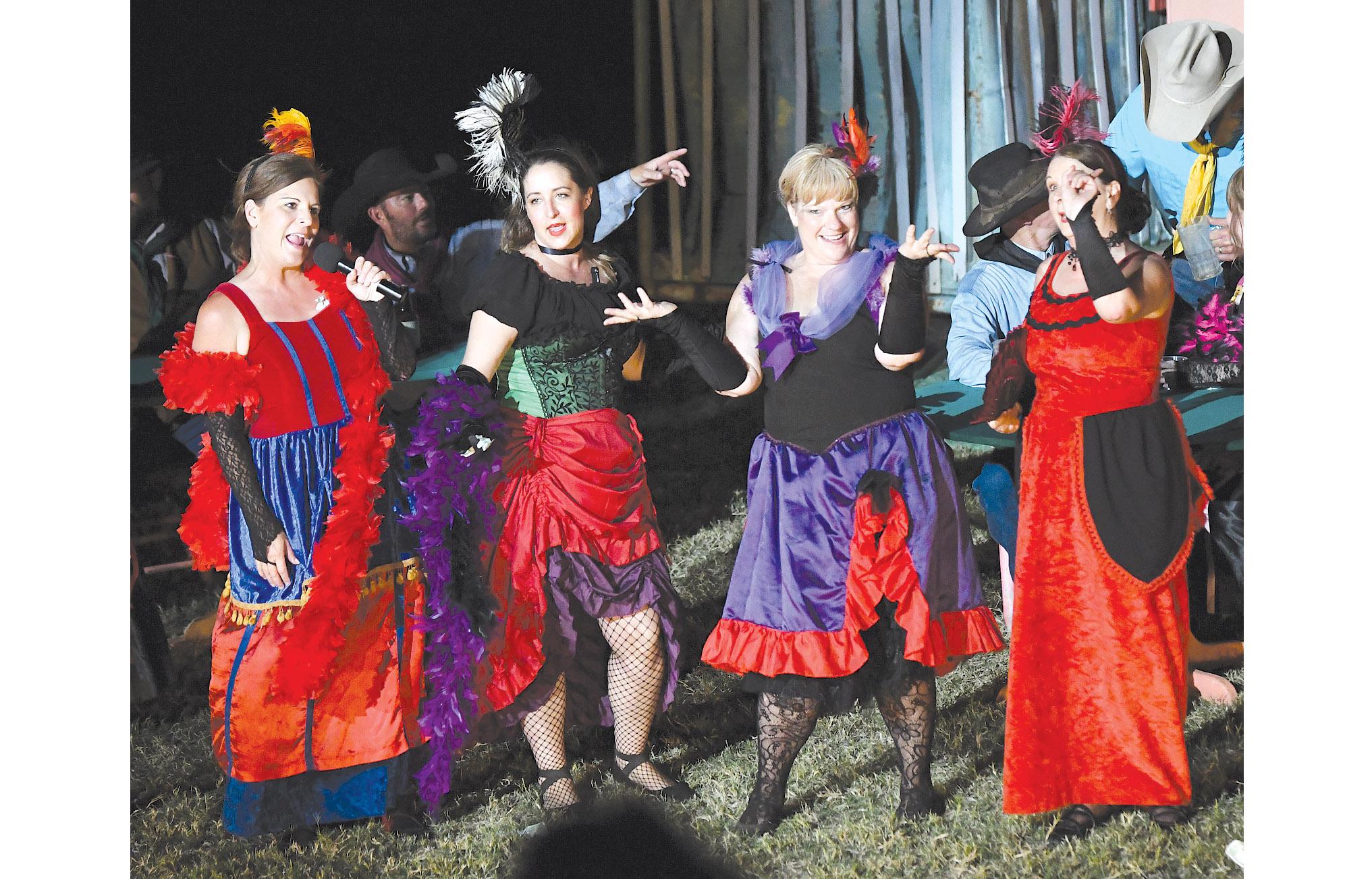
Although the show itself is being missed, the relationships and bonds made over the women discussing their hot full-length tights under their already hot long-sleeved 1880s dresses, or the worry that comes over the cast when someone on a spooked horse gets hurt, is not replaceable.
The hard work that goes into putting on the show each year is rewarded with a network of close friends.
Musselman said Fandangle was a social event with lot of parties during the 1950s.
George said there used to be a party the night after the spring sampler that was just as big a deal as the sampler itself.
Brodey Jones’ parents Mary Beth and Lesley Jones are also Fandangle veterans who maintain that rehearsals and performances, especially backstage, are like a family reunion.
“We become this family that gets a lot of special time together sharing bug spray, food, and drinks,” Mary Beth Jones said. “When the show is over, we are proud, say our good byes and see you next year to each other. It is like the outside world does not exist, especially on show nights.”
Another third generation Fandangle participant, Chloe Early, said being backstage is like an extended family get- together.
“Each of us is there to help the younger kids get costumes changed, feed them snacks, or even discipline them if needed,” Early said. “My grandmother, Connie Wood, has stories of my aunts and mom being taken care of backstage for the whole show while she and my grandfather narrated.”
Early added that she and her brother rode horses for a few years and relied on several different people to help them on and off horses, move to different areas backstage, and just whatever needed to be done.
“I am thankful my children have been able to experience those same backstage family bonds,” she said.
Early’s children are the fourth generation in her family to be in the show.
Fellow Fandangle participant and parent Ginny Ivy said being a part of Fandangle has always felt like a big family event.
“We spend time with people we might not see all year, but everyone has a bond because we are all there to be a part of something special,” Ivy said. “We are all contributing to the success of our community.”
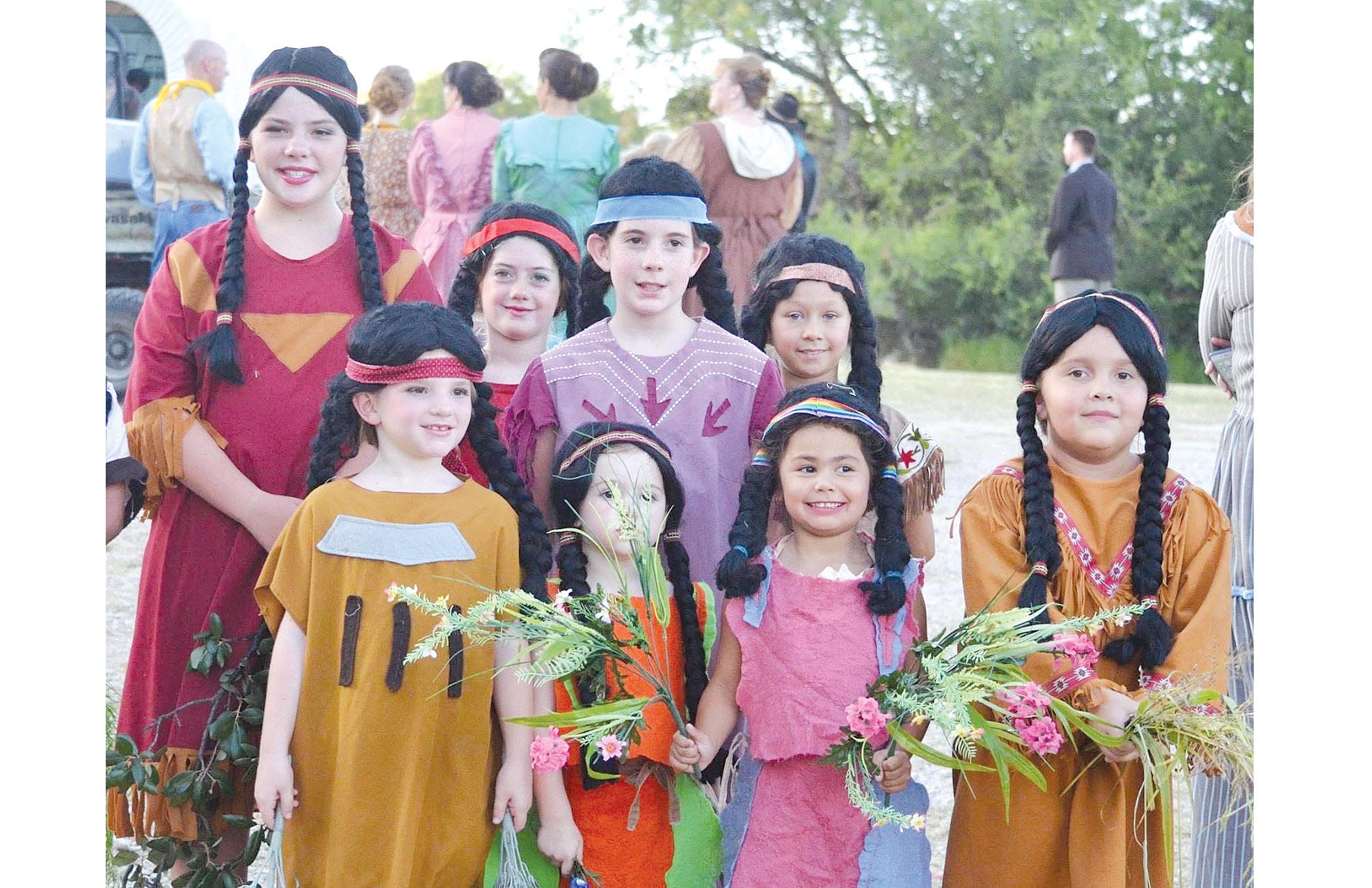
She said that having the “kiddie pen” was an invaluable resource when her kids were young. It allowed parents to involve children in the show, and the kids were able to be free to talk and play with each other.
“When kids are younger, they only care about seeing their friends and playing in that pen for six nights in June,” Ivy explained. “They have no idea what they are a part of. As the kids grow older and keep participating, they begin to see what an important part of the community Fandangle is.”
Ivy added that her children and their Fandangle friends no longer need the supervision that they once did, and the pen has seemed lonely the last few years.
“I hope we see a new crop of young families get involved next year, and then the pen will be full of the future of Fandangle once again,” Ivy said.
