
Quail need habitat protection
By Troy Reinke
District Conservationist
Natural Resources Conservation Service Shackelford County
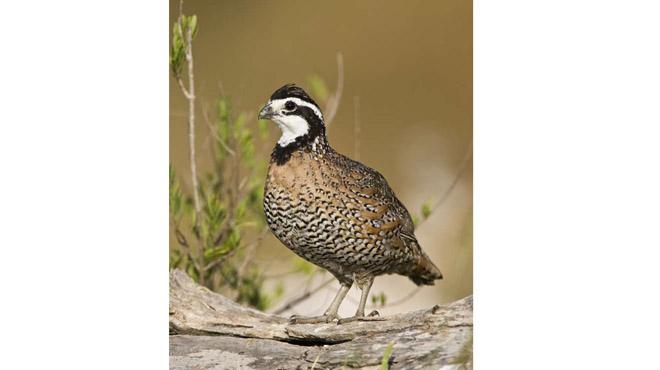
Despite being one of the most popular and most-studied species of wildlife, the northern bobwhite quail population has been in a downward spiral for the past 30 years.
Experts say it comes down to habitat and changing land use patterns. Knowing their habitat basics can help turn quail numbers around.
Food preferences
For the first six weeks of their life, quail chicks eat small beetles, bees, spiders, wasps, flies and other insects almost exclusively. They then gradually switch to grass and weed seeds and green plant leaves.
In general, grass and fruit seeds, especially those along field margins, are common in summer. Legume seeds as well as ragweed seeds and oak and hackberry mast are strong fall and winter foods. Unharvested small grain field borders also provide a valuable source of food. Other important food plants for quail include basketflower, tallow weed and bundleflower.
Since chicks need insects and grass and weed seeds, “early successional” plants are key to their habitat. That’s also why disturbance of vegetation by discing or burning is an important component in habitat development. Prescribed burning is an under-used but valuable tool. Brush sculpting and prescribed grazing are also key to managing quality quail habitat.
Nesting & brood cover
Nests are built on the ground, typically within 20 yards of a field open-ing such as a disced strip or road. Quail will move their brood from moderately dense nesting cover to more open “bugging” areas, where bare ground is interspersed with upright plants, including native “bunch” grass and forb mixtures.
Overhead cover protects quail from avian predators above; open pathways underneath allow a running escape. Known as an “edge” species, quail like field borders and any other gradual edge between crop fields and woodlands, haylands, pastures or abandoned lands. The absence of edge cover can, by itself, make an area unsuitable to quail.
Winter cover
Quail like small fields surrounded by brushy draws, dense brushy cover or wood lots. In winter, look for them in a thicket of trees, brush and vines. Warm season grasses at least eight inches high offer winter cover, too, as do uncut hay fields and moderately grazed grass/brush rangeland.
For more information, stop by our office at 584 US Hwy. 180 E in Albany. You can also visit our website at www.nrcs.usda.gov for more information about conservation practices and available programs that can help your quail management decisions.
