
COVID-19: What’s the difference?
By Kathy Thomson
The spread of SARS-CoV-2, the novel coronavirus which causes the disease COVID-19, has quickly upended everyday life around the world, with quarantines, school closures, event cancellations, working from home, and empty spaces on store shelves becoming the new normal for many.
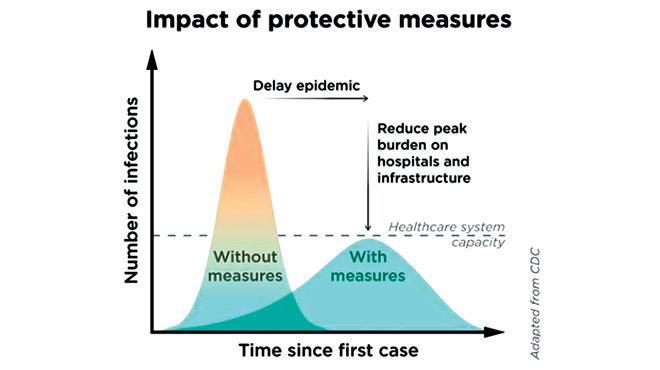
Everyone across America has been asked to do their part to try and “blunt the curve” (slow down the rate of new infections) so that health care professionals and hospitals are not overwhelmed beyond capacity.
Guidelines
•Avoid social gatherings involving groups of more than 10, and maintain a distance of six feet or more from others whenever possible.
•Stay home when you are sick.
•If someone in your house has tested positive for COVID-19, keep the entire household home. Do not go to work or school.
•If you are an older person, and/or one with a serious underlying health condition, stay home and away from others.
•Avoid discretionary travel shopping trips or social visits.
•Avoid eating or drinking in restaurants, bars, or food courts, instead use drive-through, pickup, or delivery options.
•Wash your hands often with soap and water for at least 20 seconds. If soap and water are not available, use an alcohol-based hand sanitizer.
•Avoid close contact with people who are sick, and avoid touching your eyes, nose, and mouth with unwashed hands.
•Cover your cough or sneeze with a tissue, then throw the tissue in the trash.
•Clean and disinfect frequently touched objects and surfaces.
Symptoms
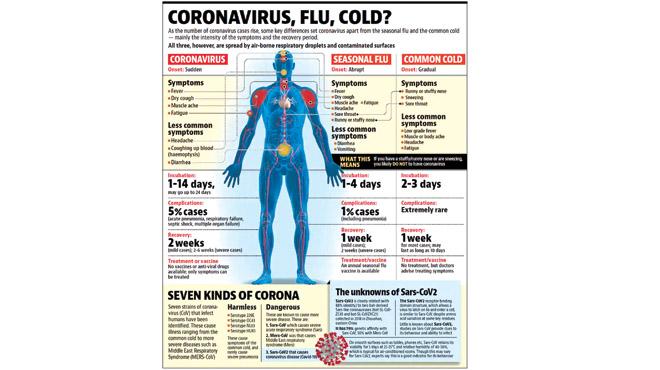
Symptoms of the coronavirus include fever, cough, and shortness of breath.
Emergency warning signs, signalling that medical attention is needed immediately, include difficulty breathing or shortness of breath, persistent pain or pressure in the chest, new confusion or inability to arouse, and/or bluish lips or face.
What To Do If Sick
Those who think they may be sick with coronavirus should call their healthcare provider for advice on what to do.
Most cases only cause minor sickness and can be monitored at home with symptomatic treatment. Those who are sick should isolate themselves as much as possible, including from any others who may live in the same house, and only leave their home if it is required to get medical care.
If health care is needed, call first and let them know that you are sick, so they can take steps to protect themselves and any other patients.
Those who have recovered from the coronavirus should consult health care professionals to make sure they are no longer contagious before they discontinue home isolation.
Concerns
As of press time on Tuesday, the majority of schools across the U.S.A. are closed, and according to information on the John Hopkins University & Medicine Coronavirus Resource Center, there have been almost 200,000 cases of coronavirus worldwide, including close to 7,000 in the U.S. and 130+ in Texas.
With about 8,300 deaths around the globe, the current death rate from this virus is around 40 times the rate seen with the flu.
There have already been over 110 deaths in the continental U.S., and the disease is now in all 50 states.
The pneumonia resulting from this novel virus has had higher mortality rates in older adults and in those who have underlying chronic medical conditions like heart disease, diabetes, and lung disease.
