
Arctic blast blankets Shackelford County
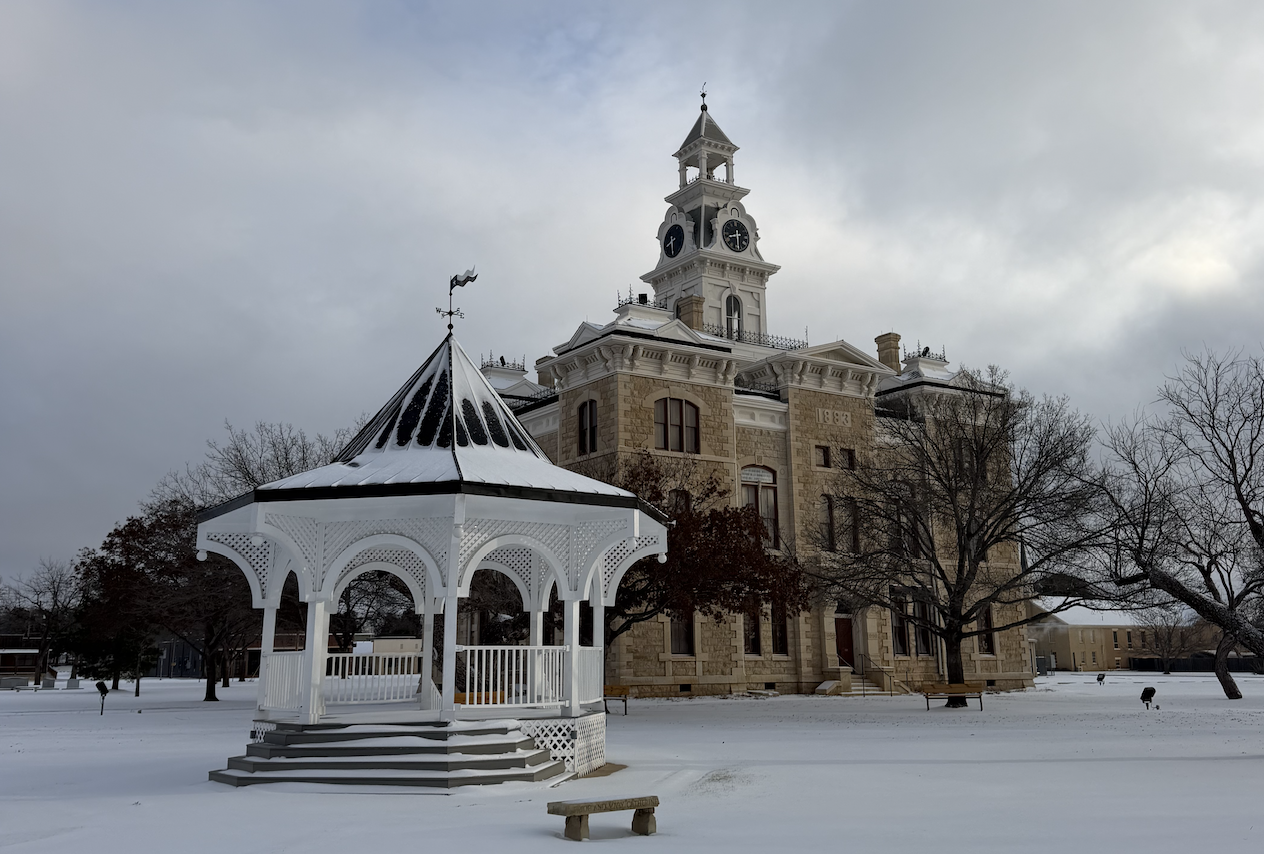
A prolonged Arctic cold front brought dangerous winter weather to Shackelford County last week, leading to school closures, schedule changes and icy travel conditions across Albany and Moran.
Albany ISD announced an early release at noon on Friday, Jan. 23, ahead of the arrival of the winter storm. Classes and all school activities were canceled the following Monday as ice and freezing temperatures moved into the area.
After icy road conditions remained an issue, the district canceled classes on Tuesday, Jan. 27, and Wednesday, Jan. 28, citing hazardous travel conditions and widespread plumbing issues as frozen pipes began to thaw. Officials noted that the district used banked instructional days and did not require makeup time.
The closure forced the postponement of the Albany Lions and Lady Lions basketball games scheduled for Tuesday night in Stamford, with the games moved to Wednesday.
Moran ISD also ended up canceling classes Monday through Wednesday as winter conditions persisted.
Temperatures ranked among some of the coldest January readings seen locally in recent decades. The high temperature on Jan. 25 reached only 12 degrees, with a low of 6. The following day saw a high of 16 and a low of 8. The six-degree low marked only the fifth time in the past 25 years that January temperatures in the area dropped into the single digits.
Although snowfall totals were lower than some early projections, ice accumulation created hazardous conditions. Approximately one inch of snow fell, bonding to a layer of ice and remaining on the ground for several days. Total precipitation for the event measured 1.17 inches, including rainfall that occurred before temperatures dropped below freezing.
City and state crews worked throughout the storm to keep essential services operating. Albany city employees, TxDOT crews and Moran city staff addressed road conditions and infrastructure issues. Moran experienced a temporary water outage when water tower controls froze, but service was restored after repairs were completed.
The winter storm resulted from a stretched polar vortex that allowed Arctic air to spill southward into Texas. Once the cold air settled over the region, additional moisture moved through the area, producing ice and light snowfall.
