
How Dyess Became Part of Our Vocabulary
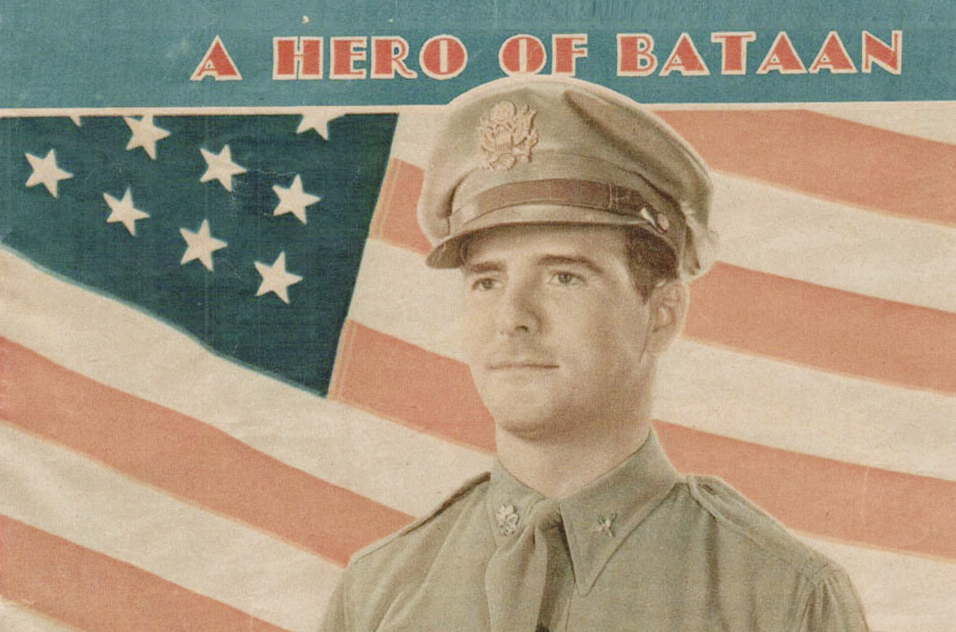
Noted Abilene historian Jay Moore recently took a look back at the story behind the naming of Dyess Air Force Base, which marks its 70th anniversary this month. With Lt. Col. William Edwin “Ed” Dyess being an Albany native and one of the community’s most honored veterans, Moore’s research has a natural connection to Shackelford County. The following was originally published in Moore’s weekly history newsletter and tells how Dyess was selected from among several candidates to become the namesake of the Abilene base.
By Jay Moore
This week marks 70 years since the name “Dyess” became synonymous with Abilene. It was on September 5, 1956, when the Air Force publicly announced they were changing the name of our base from “Abilene Air Force Base” to become “Dyess Air Force Base,” in memory and in honor of Lt. Col. William Edwin “Ed” Dyess.
However, there was only a 1 in 4 chance it would be known as Dyess AFB. Today, Abilene could well be home to King Air Force Base or, possibly, Fitzgerald or Branch AFB because Lt. Col. Walter King, 1st Lt. Mac Fitzgerald and Sgt. George Branch, Jr. were the runner-up honorees to Ed Dyess.
As bulldozers first began shaping the air base in west Abilene in 1953, it was the Army Corps of Engineers that officially named the project “Abilene Air Force Base.” However, the USAF made it clear that it reserved the right to rename the installation in the future should the Abilene community desire to honor a serviceman. That future date arrived in July of 1955 when Lt. Col. Jack Brown, commander of the 4021st Squadron, asked for the public to submit nominees. (The 4021st oversaw the base construction.) Brown noted that any serviceman nominated for the honor had to meet two criteria: he should no longer be living and should be someone who either served in a position of great authority or performed acts of outstanding heroism. Further, it was preferable that the nominee be from the Abilene area and someone who had served in the Air Force.
The deadline for submissions was in August of 1955. Nearly 50 names were suggested, including: Franklin Roosevelt, General John Pershing, journalist Ernie Pyle, Sam Houston, and Medal of Honor recipient Audie Murphy. At least 11 Abilenians nominated a local lad, Lt. Melvin Millard, a 1936 graduate of Abilene High who survived 33 months in a Japanese prison camp and was among 1,775 Americans who then lost their lives in the South China Sea when the Japanese transport ship Arisan Maru was torpedoed in 1944 by an American submarine unaware that U.S. servicemen were aboard. A memorial to Lt. Millard is in the Abilene Municipal Cemetery.
Another local nominee was Captain Rudyard Kipling Grimes. Grimes was the son of Abilene Reporter-News editor Frank Grimes and a 1934 graduate of Abilene High. Capt. Grimes was captured in the fall of the Philippines, survived the Bataan Death March, and then lost his life to disease while held in a Japanese prisoner of war camp. He was posthumously awarded the Distinguished Service Cross, the nation’s second highest award for heroism. He is buried in Elmwood Memorial Cemetery. (The former U.S. Army Reserve Training Center once located on S. Treadaway was named for Grimes.)
The Air Force whittled the nominee list down to four names and then asked Abilenians, and other readers of the Reporter-News, to vote for the man they felt most deserved the honor. The choices included two World War II veterans and two who served in the Korean conflict. Readers clipped the ballot from the newspaper and mailed it in to the base commander. The voting lasted a week with more than 3,000 sending in their preference. The Air Force never revealed the actual results but did report that the total votes for the candidates were very close. The final selection in choosing which of the four would be the base namesake was left up to the Air Staff at the Pentagon. It was not an easy choice.
The name of Lt. Col. Ed Dyess was submitted by his hometown through the Albany Chamber of Commerce. Dyess had been the commander of the 21st Pursuit Squadron, a combat fighter group stationed in the Philippines at the time of the attack on Pearl Harbor. After his squadron lost their planes to Japanese bombs, Dyess led his men into a field battle against the enemy. He was captured on Bataan, survived the Death March and then managed to escape from his Japanese prison camp. After returning to the United States, Dyess was preparing to re-enter the war when he lost his life in an airplane accident in California. His P-38 fighter lost an engine on take-off and he was forced to try and land. Just before setting his plane down on a street in Burbank, California, he veered to avoid a car and crashed. He was recommended for the Congressional Medal of Honor and already held the Distinguished Service Cross and the Silver Star. Ed Dyess is buried in Albany.
Lt. Col. Walter King was raised in Scranton and Cisco but his wife was living on S. 7th Street in Abilene when he lost his life in 1951. He was a 10-year veteran of the Air Force who served in the Pacific during World War II and had served in Korea since 1950. In February 1951 he was piloting a B-26 bomber on a low-level attack when the plane exploded, killing all on board. King was awarded the Air Medal with five Oak Leaf Clusters and the Distinguished Flying Cross with two Oak Leaf Clusters. He is buried in the Scranton Cemetery in Eastland County.
Mac Fitzgerald was a 1st Lt. in the Air Force. Fitzgerald had attended Abilene Christian College for three years and married an Abilene girl, Joyce Holley, in 1952. (His father was the principal of North Park School in Abilene and later at Jackson Elementary, now Alcorta.) He entered the Air Force in 1951 and was stationed in Korea in 1952 where he flew F-94 fighter jets with the 319th Interceptor Squadron. Following temporary leave in Japan, he was among 129 servicemen who lost their lives when the C-124 transport plane carrying them back to Korea crashed soon after take-off. At the time, it was the deadliest accident in aviation history. He was posthumously awarded the Air Medal and was buried in Elmwood Memorial Cemetery in 1953. (His widow would later marry longtime AISD educator Carl Cheatham. Today, they live in Clyde.)
Sgt. George Wesley Branch, Jr. was raised in Abilene and graduated from Abilene High in 1941. By age 18 he was the assistant manager at the Abilene airport. He enlisted in the Army Air Corps in 1943 and flew 42 combat missions over France and Germany as a gunner on a B-26. Having survived World War II, he was killed by a hit-and-run driver as he changed a flat tire west of Albany in January of 1946. He was 23. He is buried in the Abilene Municipal Cemetery.
After months of deliberation, it was shortly after noon on September 5, 1956 — nearly a year after the local balloting — that Pentagon officials announced that a decision had been reached. Abilene Air Force Base would be renamed Dyess Air Force Base. The official change took place at a ceremony held on December 8, 1956, on the eve of what would have been Ed Dyess’ 40th birthday.
The names — Abilene and Dyess — have been proudly linked ever since. And, assuredly, embedded in that pride are the names Millard, Grimes, King, Fitzgerald, Branch, and hundreds more.
